Opinion
The Messika Effect: Redefining Diamond Jewelry
From Valérie Messika’s childhood fascination with diamonds to the signature Move collection, discover how Messika brought a new energy to diamond jewelry.
For generations, diamonds have carried a certain formality. They celebrated engagements, anniversaires and important occasions. They are surely pieces to treasure but not always designed for everyday life.
Messika approached them differently. Founded in Paris in 2005 by Valérie Messika, the Maison set out to make diamonds feel lighter, more effortless and easier to wear. Rather than treating the diamond as something static, Messika made movement part of the design itself. Eventually, the idea became the Maison’s most recognisable collection: Move.
The moving diamond
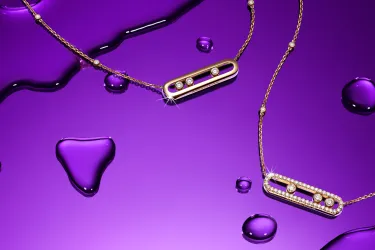
Growing up around diamonds, Valérie Messika would watch her father handle and move diamonds between his fingers. That simple image stayed with her and ultimately became the inspiration for Move, launched in 2007. The idea was remarkably straightforward: enclose diamonds within a polished gold track, allowing them to slide freely.
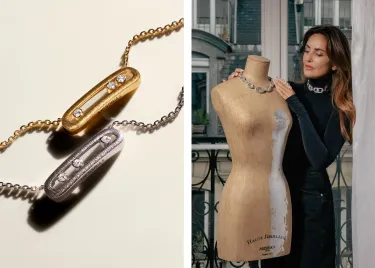
Three diamonds take the lead, while their three-part composition has come to symbolise the love of yesterday, today and tomorrow. It is a simple idea, but visually distinctive. The diamond is no longer merely something to look at; its movement becomes part of wearing the piece. The moving diamond concept gave Messika something every successfully Maison needs: a signature that could be recognised instantly.
A new way to wear diamonds
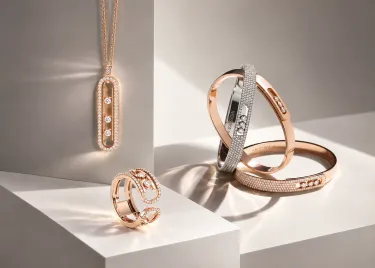
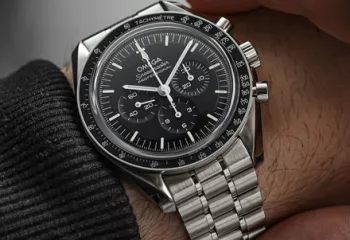
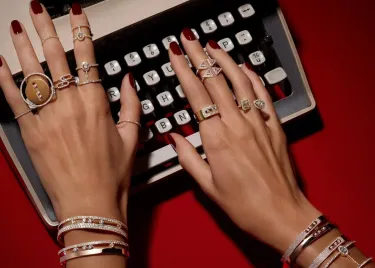
Messika also changed the way diamond jewelry could be styled. Move pieces are designed to work naturally with the rest of a wardrobe. Bracelets can sit alongside a favourite watch. Necklaces can be layered at different lengths. Rings can be stacked, while earrings can introduce just a small flash of diamonds rather than dominating an entire look. The jewelry is designed to be mixed, matched and worn repeatedly rather than kept safely in a box.
That versatility helped place Messika somewhere between the traditional world of fine jewelry and the faster-moving language of fashion.
Entering the fashion conversation
Celebrity visibility has surely pushed Messika into the fashion conversation. The Maison has appeared in names including Beyoncé and Rihanna, while Gigi Hadid collaborated with Valérie Messika on a collection celebrating Move's tenth anniversary. Kendall Jenner later became a face of the Maison. Nevertheless, just celebrity alone doesn't explain the brand's staying power.
Messika arrived at a moment when luxury jewelry was becoming increasingly connected to personal style. Diamonds didn't have to wait for a wedding, anniversary or red carpet. They could be worn with denim, a suit, a simple T-shirt, or alongside a favourite watch without a second thought. That is perhaps the real Messika effect. The brand didn't change what a diamond is. It changed the context around it.

The Move phenomenon
Today, Move has developed into an entire design language. The differences are subtle but important. The best place to start with is by choosing way you want to wear it.
Move Classique stays closest to the Maison’s original three-diamond aesthetic, while Baby Move offers a lighter, more delicate interpretation that lends itself naturally to everyday wear and layering. Move Uno takes the idea even further towards minimalism, reducing the signature to its most essential form.
For greater presence, the proportions and shapes become more expressive. Move Noa reinterprets the motif as a structured bangle, Move Link introduces bold, chain-like geometry, and So Move takes the familiar design into a more sculptural direction. Lucky Move, meanwhile, brings colour into the collection through ornamental stones paired with diamonds.
Different in scale and character, each collection returns to the same idea that defined Messika from the beginning: diamonds designed not simply to be admired, but to become part o an everyday life. Nearly two decades after Move first appeared, that idea still feels incredibly current.