Guide
The High-tech Materials In Modern Watchmaking
How titanium, ceramic and carbon are changing the aesthetics and wearability of luxury timepieces.
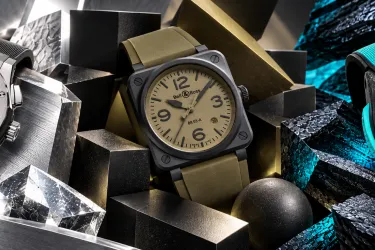
A watch case has a surprisingly demanding job. It has to protect a delicate mechanical movement from a lifetime of daily knocks, scratches, moisture and many possibly unpredictable conditions. The choice of material is therefore far more than appearance. Weight, hardness, corrosion resistance and durability all influence how a timepiece is designed, and ultimately how it feels on the wrist.
Traditional materials such as stainless steel, gold and platinum have shaped luxury watchmaking for decades. Today, however, a paradigm shift is underway. Beyond these established choices, watchmakers are adapting advanced materials from aerospace, motorsport and high-tech engineering. Among the most influential are three in particular: titanium, high-tech ceramic and carbon composites.
Titanium: Pioneer of high-tech materials
When titanium first entered watchmaking in the 1960s, it promised something revolutionary: an extraordinary strong watch without unnecessary weight. Titanium is approximately 43% less dense than typical stainless steel where its low density, strength and resistance to corrosion were originally designed for aerospace applications. Watchmakers soon began asking whether those same properties could benefit something worn on the wrist every day. The advantage becomes noticeable with large sports, diving and tool watches.
In 1970, Citizen introduced the X-8 Chronometer, the world's first commercial watch cased in 99.6% pure titanium, marking an important milestone in watchmaking. Still, the material was far from easy to work with. Early engineers found the material difficult to press, machine and polish—a challenge that would drive decades-long pursuit of further development.
Today, titanium is a natural choice for watches designed to endure demanding environments. It is well suited to diving and sports watches, and its biocompatibility also makes it comfortable for prolonged contact with the skin. Visually, untreated titanium has a darker, more subdued and matte appearance. While modern surface treatments have significantly enhanced its durability, titanium remains a true metal; unlike ceramic, its softer nature means it can still develop a unique patina of daily wear over time. For many collectors, that resilience is exactly what makes it a modern classic.
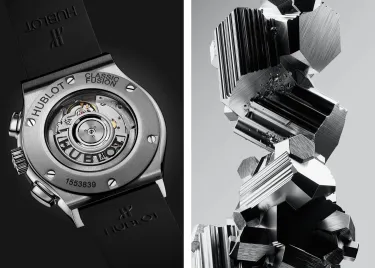
Titanium’s versatility means it can take on many different personalities depending on the brand's vision. Explore some of our curated selection in distinct styles:
Hublot Classic Fusion Titanium
- The Vibe: Elegant, minimalist, and ultra-refined daily luxury.
- Design Note: Hublot combines polished and satin-finished titanium to bring contrast and depth to the Classic Fusion’s clean, slim profile. The result retains the refined metallic character of a traditional luxury watch while offering the noticeably lighter feel that makes titanium so comfortable for everyday wear.
Tudor Pelagos
- The Vibe: Robust and ready for the water.
- Design Note: Titanium feels entirely at home on a professional dive watch. The Pelagos pairs a lightweight 42 mm titanium case with a restrained matte finish and 200 metres of water resistance, creating a capable tool watch without the additional weight often associated with a substantial diving case.
IWC Pilot's Chronograph Mercedes AMG Petronas
- The Vibe: Motorsport-inspired, technical and performance-driven.
- Design Note: IWC brings titanium’s lightweight strength into the fast-paced world of Formula One. The 41 mm titanium case, crafted from sandblasted Grade 5 titanium, delivers a distinctive matte-grey finish inspired by high-performance engineering.
Ceramic: Master of scratch resistance
Unlike titanium, ceramic is not a metal at all. High-tech ceramics is typically made from mineral powders, often zirconium oxide, which are shaped and sintered at extremely high temperatures to form an exceptionally hard and stable material. When ceramic began entering luxury watchmaking more seriously in the 1980s, it offered something metals could not: remarkable resistance to everyday scratches combined with an entirely different visual language.
In 1986, IWC introduced the Da Vinci Ref. 3755, which the manufacture describes as the first watch case made from specially hardened zirconium-oxide ceramic. That same year, Rado launched the Integral, beginning its long association with high-tech ceramic and becoming the first watch brand to produce ceramic watches in series. Over the years, ceramic has evolved from a technical innovation into a creative material in its own right.
The trade-off is that ceramic is more brittle than metal. A steel or titanium case may dent after a severe impact; ceramic can potentially chip or crack. Yet its visual appeal is difficult to deny. Polished ceramic can achieve an almost jewel-like brilliance, while matte finishes create a more technical, stealthy character. From deep black and pure white to increasingly bold colours, ceramic has given modern watchmakers a completely new design vocabulary.
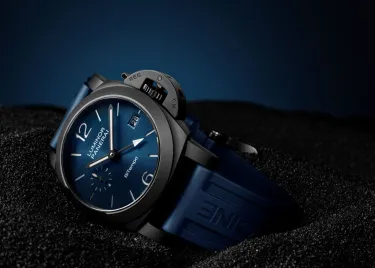
In modern watchmaking, ceramic goes far beyond scratch resistance. Depending on how it is finished and coloured, it can feel tactical, minimalist or distinctly architectural. Explore some of our curated selection in different interpretations:
Panerai Luminor GMT
- The Vibe: Bold and architectural.
- Design Note: Keeping Panerai’s historic, oversized diving-watch profile, the Luminor GMT uses black ceramic to give its signature cushion-shaped case and crown-protection bridge a darker, more contemporary character. The material adds excellent scratch resistance while preserving the bold wrist presence that defines the collection.
Bell & Ross BR-03 Military Ceramic
- The Vibe: Tactical, stealthy and purpose-built.
- Design Note: The BR-03’s aviation-instrument-inspired square case is a natural match for technical ceramic. Its matte finish reinforces the military character while giving the 41 mm case excellent resistance to everyday scratches and wear. The muted surface also keeps reflections to a minimum, allowing the bold geometry to take centre stage.
Maurice Lacroix Aikon Automatic Ceramic
- The Vibe: Contemporary, monochrome and urban.
- Design Note: Maurice Lacroix takes ceramic in a completely different direction. The Aikon Automatic Ceramic pairs a ceramic case with a matching ceramic bracelet, creating a seamless monochrome look. The white 39 mm version is particularly effective at showing how ceramic can move beyond traditional black and bring a brighter, more modern character to a sports watch.
Carbon Composites: Overall lightweight performance
Carbon composites are engineered by combining carbon fibres with a resin or polymer matrix. The result can be exceptionally light and rigid, with strong resistance to corrosion. Depending on how the material is manufactured, the surface may reveal swirling, marbled or fibrous patterns that give each watch a more technical look than traditional metal cases.
Carbon made a notable entrance into modern watchmaking in 2007, when Audemars Piguet introduced the Royal Oak Offshore Alinghi Team, widely recognised as the first watch with a forged-carbon case. Since then, carbon composites have evolved rapidly, with watchmakers developing their own formulations, manufacturing techniques and increasingly complex case constructions.
Carbon's greatest advantage is its high strength-to-weight ratio. It allows watchmakers to create substantial cases without adding excessive weight, making it incredibly suited to sports and performance watches. Unlike ceramic, which is known for its scratch resistance, carbon stands out for its lightness, structural properties and distinctive surface texture.
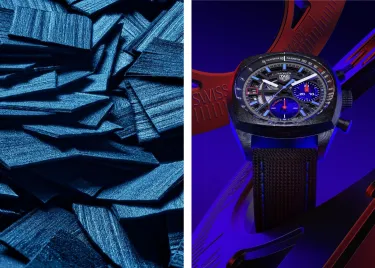
Carbon’s nature gives brands considerable freedom to experiment with case construction, texture and performance. Explore some of our curated selection:
NORQAIN Wild ONE Skeleton
- The Vibe: Athletic, ultra-light and ready for action.
- Design Note: The Wild ONE uses NORQAIN’s proprietary NORTEQ® carbon-fibre composite as part of a multi-layer case construction designed around shock absorption and low weight. Its characteristic marbled texture gives the 42 mm sports watch a distinctly technical appearance, while the skeletonised movement reinforces the sense of lightness throughout the design.
TAG Heuer Monza Flyback Chronometer
- The Vibe: Motorsport heritage with a technical edge.
- Design Note: The Monza pairs a lightweight 42 mm carbon case with an openworked dial and COSC-certified Heuer 02 Flyback movement, creating a watch in which the case material feels as performance-driven as the chronograph inside it.
Franck Muller Vanguard Carbon
- The Vibe: Sculptural lines and bold proportions.
- Design Note: Franck Muller brings carbon into the Vanguard’s dramatic tonneau-shaped architecture. The dark, lightweight case emphasises the collection’s sweeping curves and oversized proportions while keeping such a substantial design comfortable on the wrist.
Why these materials matter
Titanium, ceramic and carbon each approach the same challenge differently. Titanium keeps the resilience and character of metal while dramatically reducing weight. Ceramic brings phenomenal scratch resistance and an entirely new palette of finishes and colours. Carbon composites push lightness and structural engineering even further, while giving each watch a distinctly technical visual identity.
Together, they show how modern watchmaking is no longer defined only by what happens inside the movement. The materials surrounding it now play an equally important role in how a watch performs, how it looks and how it feels on the wrist.