Beneath the surface, the history of diving watches
Let’s dive into the depths together and discover the complications and the most iconic diving watches.
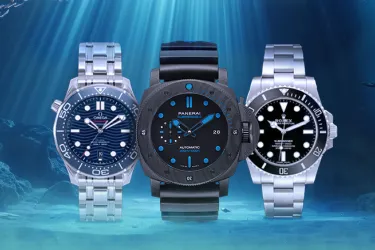
When we talk about diving watches, we are addressing an even deeper subject: safety. Indeed, the complications developed for diving from the 1950s onward—such as the unidirectional rotating bezel and the helium escape valve—as well as design features like enhanced legibility, all serve to reinforce the diver’s safety.
What makes the diving watch so distinctive is that it was never conceived as an object of prestige, but as a survival instrument. Before becoming a symbol of success or a style accessory, it accompanied those operating in hostile environments where every detail could make the difference. Figures from popular culture, such as James Bond, helped anchor the diving watch in the collective imagination, associating these timepieces with action, mastery, and a certain idea of elegance. Over the decades, this vision has been embodied in models that have become iconic, such as the Rolex Submariner and the Omega Seamaster Diver 300M.
Once reserved for professionals, these innovations have gradually become democratized and now contribute to the success of emblematic models produced by brands such as Rolex, Omega, Tudor, and Panerai.
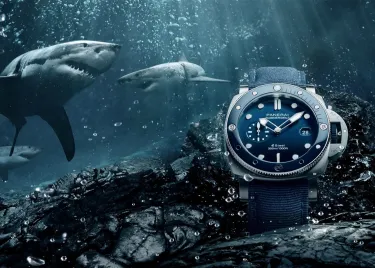
Diving-specific complications
The helium escape valve is a complication generally considered useful only for deep professional diving. Nevertheless, it reflects exceptional technical expertise and extraordinary resistance. The decompression valve is typically automatic—although some emblematic models, particularly from Omega, offer it in a manual version. Its role is to allow helium that has accumulated inside the case to escape, thereby protecting the watch from the stresses caused by pressure at great depths.
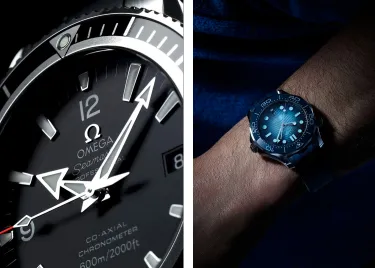
The unidirectional rotating bezel is a complication of far greater practical use for divers of all levels. The system is simple: the external bezel acts as a countdown timer or chronometer. The diver aligns the bezel’s index with the minute hand at the start of the dive and can then observe the elapsed time as the minute hand progresses. The bezel rotates in only one direction for safety reasons: in the event of an accidental impact during the dive, it can only move forward, preventing the index from shifting backward—which would indicate a shorter dive time than the actual one. Several iconic diving watches feature this complication, such as the Rolex Submariner and the Omega Seamaster Diver 300M. Often, the bezel’s numerals are luminescent to ensure clear and rapid visibility, even in dark conditions. These technical requirements have gradually shaped an instantly recognizable aesthetic. A notched bezel, broad hands, generous indices, and strong contrasts—each element responds to a strict requirement for legibility and reliability in extreme conditions.
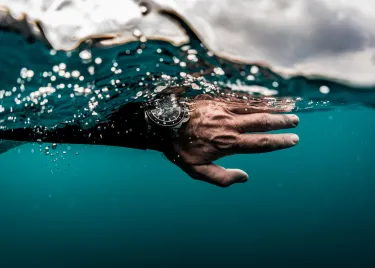
Yet this functional constraint has given rise to a design that has become iconic, extending far beyond the realm of diving. Popularized in particular by the Rolex Submariner, this visual language is now found in many contemporary interpretations such as the Tudor Black Bay, which revisits the codes of the diving watch with a more modern approach. Between the 1910s and the 1950s, many manufacturers used radium to make indicators luminescent—hence the name “Radiomir” given by Panerai to its first watch with luminescent indices. Radium, long used for its luminous properties, was later revealed to be a highly radioactive material with tragic consequences. The workers responsible for painting the dials—who habitually refined their brushes with their lips—were repeatedly exposed to its radiation, and many died as a result. This dark chapter in watchmaking history led to the adoption of tritium, still radioactive but far less dangerous, before the industry ultimately turned to modern non-radioactive pigments, giving rise to Luminova technology, now the standard in contemporary watchmaking.
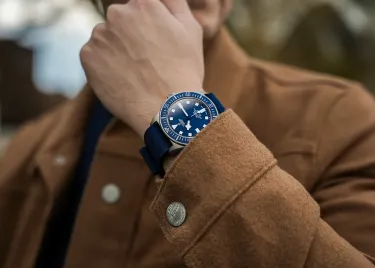
The power reserve indicator, although less systematic than on dress watches, takes on particular meaning in the context of diving. It allows the diver to ensure, before entering the water, that the watch has sufficient energy to last for the entire session—information that can become critical in the case of prolonged decompression or unforeseen underwater circumstances. Unlike a quartz watch, whose battery suddenly dies, a mechanical watch gradually slows down before stopping, making time readings unreliable during its final moments of operation. The power reserve indicator therefore takes on its full significance: it transforms uncertainty into readable information, turning this complication into far more than an aesthetic feature—a genuine safety tool.
Rolex explores the depths
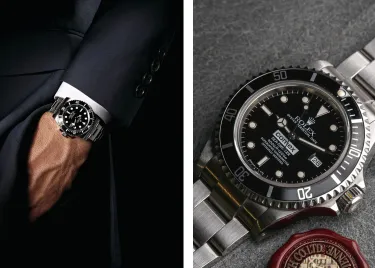
While many watchmakers now produce diving watches, only a few have truly shaped the history and imagination of this category. At Watchdreamer, our selection highlights the brands that have successfully combined technical innovation, aesthetic rigor, and watchmaking heritage. From iconic divers such as the Rolex Submariner—conceived as an absolute benchmark—to the Omega Seamaster Diver 300M, as well as the Tudor Black Bay and the Panerai Luminor, each model embodies a singular vision of the diving watch.For decades, Rolex has positioned itself as the ultimate reference in the field of diving watches. Rolex did not single-handedly invent the diving watch, but it shaped its standards, iconography, and technical evolution throughout history with its flagship models. In short, if there is one brand that embodies adventure, it is Rolex.
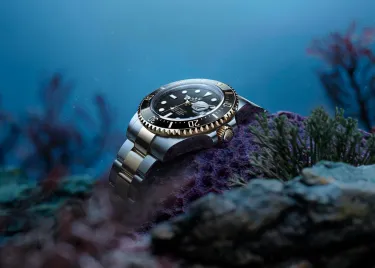
The brand with the crown logo offers several flagship diver models that push all limits to deliver robust, elegant, and high-performance timepieces. The Submariner is the absolute icon of the diving watch, establishing the design foundations for nearly all divers that followed. The collection continues with the Sea-Dweller, a professional instrument developed in collaboration with COMEX, the French company that pioneered professional diving and whose divers pushed the limits of underwater exploration to depths previously considered inaccessible. More technical and more extreme, it perfectly illustrates Rolex’s ability to evolve its models without ever betraying their DNA. Through these timepieces, the brand has set standards that continue to influence the entire world of diving watchmaking today. This quest for the extreme was spectacularly illustrated in 2012 when filmmaker and explorer James Cameron descended solo to the bottom of the Mariana Trench, nearly 11,000 meters deep, wearing a Rolex Deepsea Challenge on his wrist. Two additional watches of the same prototype were attached to the exterior of his submersible, and all three returned in perfect working condition, demonstrating just how far watchmaking engineering can be pushed under extreme conditions.
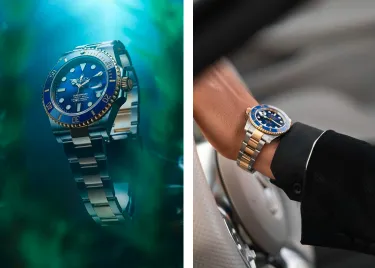
Today, the diving watch occupies a unique place in the world of watchmaking. While most of these timepieces are no longer exposed to the extreme conditions for which they were designed, their technical legitimacy remains intact. Every detail, every complication, every design choice bears the trace of a real use—one born underwater, where precision and reliability were not a matter of comfort but of necessity. It is likely this origin that continues to give diving watches their particular strength. They tell the story of watchmaking conceived as a tool before becoming a symbol—shaped by constraint and tested in environments where error was not an option. From the Rolex Submariner to the Omega Seamaster Diver 300M, and through more contemporary interpretations such as the Tudor Black Bay or the Panerai Luminor, these watches embody a rare balance between engineering, history, and aesthetics. Whether accompanying a diver into the depths or worn in everyday life, diving watches remain the witnesses of a watchmaking tradition guided by reality—one where function shaped the myth, and where technology continues, discreetly, to tell a story.