

Guide
Habits that could damage your watch
Discover the everyday habits that can affect your watch—and the simple ways to avoid unnecessary damage.
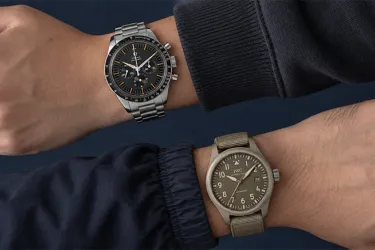
A fine watch is built to last. With the right care, a well-made mechanical timepiece can accompany its owner for decades and even be passed on to the next generation.
Meanwhile, durability does not mean invulnerability. Some of the things that can affect a watch are obvious: a hard impact, water entering the case or an accidental drop onto a stone floor. Others are much easier to overlook. A magnetic phone case, an unsecured crown, extreme heat or even the way a watch is stored for long periods can all have consequences over time.
The good news is that caring for a watch does not require treating it like a museum piece. Most everyday risks can be avoided simply by understanding what your watch was designed to withstand. Here are some common habits worth paying attention to.
Magnetism: The invisible force around your watch
Magnetic fields are invisible, which makes them particularly easy to overlook. Yet for a traditional mechanical movement, strong magnetic exposure can interfere with some of its most delicate components, potentially causing the watch to gain or lose time. And magnets are not just the obvious ones. Magnetic phone cases, tablet covers, speakers, headphones, handbag clasps and other everyday objects can all create magnetic fields close to where you wear your watch or store your watch.
There is no need to panic every time your watch comes near a phone, however. The greater concern is significant or prolonged exposure, specially for movements without dedicated anti-magnetic protection.
This is also an area where modern watchmaking has made considerable progress. Some contemporary movements are specifically engineered to withstand very strong magnetic fields. Omega’s Master Chronometer watches, for example, are tested for resistance to magnetic fields of 15,000 gauss. The lesson is simply to know what your watch was designed to handle—because magnetism can remain invisible until your watch starts telling the wrong time.
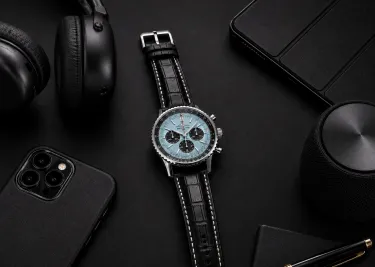
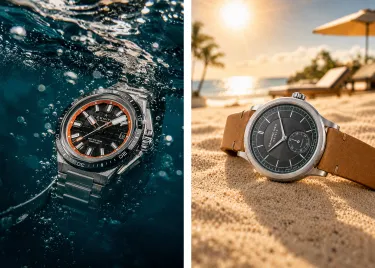
Water & Temperature: Know your watch's limits
One of the most common misunderstandings in watch ownership is assuming that a watch rated to 100 metres, or even 300 metres, is effectively waterproof in any situation. The depth rating refers primarily to the level of static water pressure the watch has been tested to withstand under controlled conditions. It should not be read literally as a guarantee against every type of water exposure.
A shower is a good example. Although it may seem far less demanding than being 100 metres underwater, it exposes the watch to a very different environment: direct water jets, soap and detergents, steam and changing temperatures. These conditions can affect the seals and make it easier for moisture to find its way past them. This is why some manufacturers recommend avoiding showers even with watches carrying substantial water-resistance ratings.
There is another detail that is easy to forget: water resistance can change over time. The gaskets and seals that keep moisture out naturally age, and a hard impact, temperature change or previous intervention can also affect their effectiveness. A watch that was water resistant when new may therefore need to be checked again years later.
Temperature matters too. Extended exposure to strong heat or sudden temperature changes can affect lubricants, materials and seals. Avoid leaving a watch beside a radiator, in a hot car or in intense direct sunlight for long periods. And if your watch does go into the sea, give it a freshwater rinse afterwards. Salt and sand can be surprisingly unforgiving to cases, bracelets and moving parts.
Above all, don't test your watch's limits by assumption. Before swimming, diving or even wearing it around water, check the manufacturer's specifications and make sure the crown and pushers are properly secured. A little caution is considerably easier than dealing with moisture inside a mechanical movement later.
Shocks: Know when to wear your watch
A luxury watch is made to be worn, but that doesn't mean every watch is made for every activity. A rugged sports watch can be engineered to handle repeated movement and impact. A finely finished timepiece, on the other hand, may contain hundreds of tiny components working together with remarkable precision. A sudden knock might leave nothing more than a mark on the case, or something much deeper inside.
Think of it like dressing for the occasion. You would not choose hiking boots for a formal dinner, and your most delicate dress watch is probably not the ideal companion for a mountain-bike ride either. The same goes for everyday activities. Gym sessions, contact sports, heavy manual work or activities involving repeated impact are moments when it can be sensible to leave a more delicate watch safely aside.
Exercise also brings sweat. Over time, perspiration can affect leather straps and other materials, so cleaning the watch appropriately after heavy wear is worthwhile.
That doesn't mean you need to take your watch off at the first sign of activity. It simply means understanding the type of watch you are wearing and choosing the right one for the occasion. Sometimes, knowing when not to wear a watch is part of looking after it.

Date Setting: Don't change it at the wrong time
This is one of the easiest mistakes to make with a mechanical watch. Every owner of a watch with a calendar should know about.
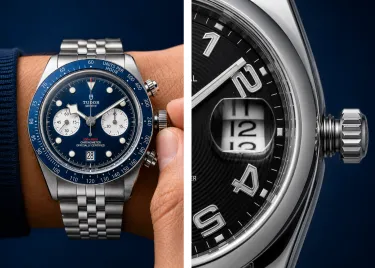
On many mechanical movements, the date mechanism begins engaging several hours before midnight and remains active for some time afterwards. Using the quick-set date function during this period can interfere with gears that are already working to advance the calendar and cause damage.
You may have heard rules such as “never change the date between 9 p.m. and 3 a.m.” There is in fact no universal window. Some manufacturers specify 8 p.m. to 2 a.m.; others use 8 p.m. to 3 a.m., and the mechanism can vary from one calibre to another.
A useful habit is to move the hands to a clearly safe daytime position (well away from the midnight date-change period) before using the quick-set date. Most importantly, check the instructions for your particular movement. A few seconds spent setting the watch correctly can prevent a much more complicated repair.
Storage: Don't simply forget about it
There is nothing wrong with allowing a mechanical watch to stop when it isn't being worn. Nevertheless, leaving a watch forgotten for years is another matter.
Even while sitting still, seals, lubricants and other materials continue to age. Storage conditions matter too, particularly when it comes to humidity, extreme temperatures, direct sunlight and strong magnetic fields. Leather straps can be especially sensitive to heat and moisture.
Quartz watches need attention as well. A depleted battery should not simply be forgotten inside the watch for an extended period, as leakage can potentially damage the movement. If a watch has been stored for several years, particularly a valuable or complicated piece, it can be worth having it checked before putting it back into regular use.
The point isn't to keep every watch constantly running. It's simply not to forget about it.
Don't Worry: A watch is meant to be worn
After reading about magnets, water, shocks, temperature and delicate mechanical components, it would be easy to become overly cautious. That is not the point.
A luxury watch is not meant to spend its life hidden in a box. It is designed to be worn, enjoyed and, with the right care, passed through the years. There are countless ways a watch can be damaged —but most everyday risks are easy to avoid once you know what to look for.
Know your watch. Know its limits. And, above all, know when to wear it and when to give it a little extra care. When in doubt, always refer to the manufacturer's recommendations for your particular model or have the watch inspected by a qualified professional. Because a great watch should be enjoyed today and cared for well enough to keep telling its story tomorrow.